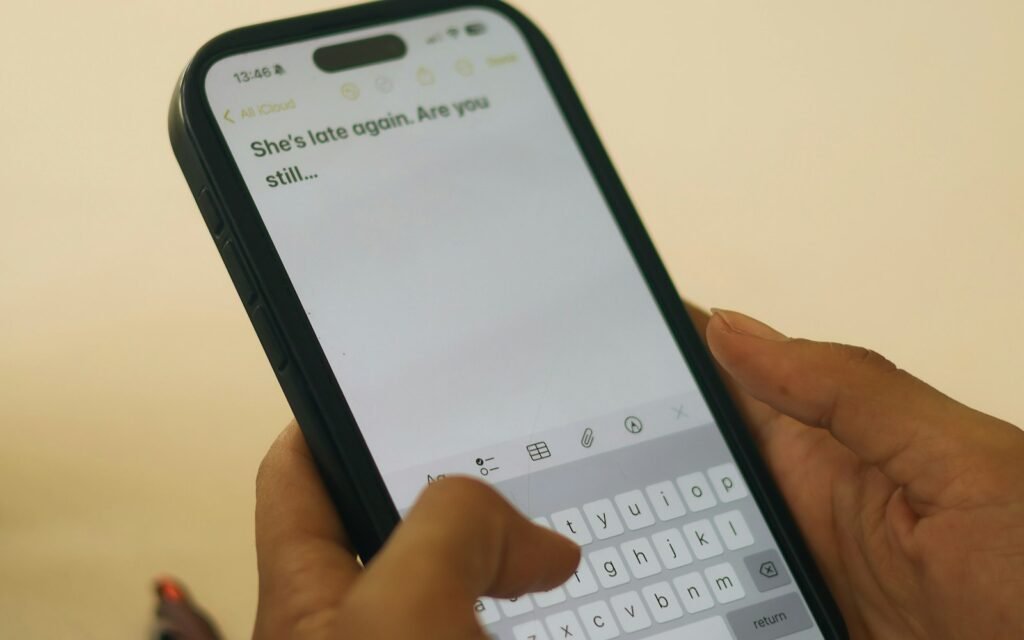
There is a lot of talk about e-commerce websites, platforms and marketplaces. Yet for many small Tunisian brands, the most effective shop is already in their customers’ pockets. It is called WhatsApp.
In the Creative Tunisia 2.0 training sessions in Kasserine, Gafsa and Mahdia, as in the Machrou3ik Online programme, I made WhatsApp Business the starting point for selling online. Not because it is easy. Because it is realistic. Here is why, and how to use it seriously.
Go where the conversations already happen
In Tunisia, a large share of local trade already happens through messages. Customers ask for a price, a photo, availability, a delivery time. Many sellers reply from their personal account, with no catalogue, no greeting message and no organisation. Orders get lost among family conversations.
WhatsApp Business turns that habit into a professional tool without asking the customer to change anything. That is the key: you don’t force customers to learn a new way of buying. You professionalise the one they already use.
The best sales channel is not the most modern one. It is the one where your customers already talk to you.
The four settings that change everything
The first is a complete business profile: brand name, clear description, opening hours, address or delivery area, link to your Facebook or Instagram page. A well-kept profile reassures before the first message.
The second is the catalogue. Each product with a good photo, a displayed price and a short description. Showing prices is often a small revolution: it saves dozens of messages, filters out the merely curious and builds trust.
The third is automatic messages: a greeting that presents the offer and an away message saying when you will reply. The customer knows they have been heard.
The fourth is labels. New customer, order in progress, paid, delivered: in seconds, you know where each conversation stands. It is a minimalist CRM, but a CRM nonetheless.
The product photo, a detail that isn’t one
In the workshops with artisans, we spent a considerable amount of time on photography. Natural light near a window, a neutral background, a centred product, several angles, a close-up of the material. With a simple smartphone, the difference is spectacular. A sharp, bright photo does more for sales than a long description.
From conversation to loyalty
WhatsApp is not just a sales tool. It is a relationship tool. A message to confirm shipping, another to check the product arrived safely, a usage tip, a new product shared discreetly: these simple gestures turn a buyer into a loyal customer.
Beware of excess, though. Broadcast lists should be used respectfully, for people who have agreed to receive your messages, and at a reasonable frequency. A brand that floods its customers loses within weeks the trust it took months to build.
When to move to the next step
WhatsApp Business is a gateway, not a final destination. When orders increase, when the same questions keep coming back, when you want to sell to customers who don’t know you yet, it is time to add an online shop, ad campaigns and structured emailing. But those tools work much better when the foundation, the conversation with the customer, is already solid.
Start there. Set up your profile, build your catalogue, show your prices. It is often the most profitable hour of a whole year of marketing.
Go further
Frequently asked questions
Is WhatsApp Business free?
Yes, the WhatsApp Business app is free and lets you create a business profile, a catalogue, automatic messages and labels.
Should you show prices in the catalogue?
Yes. Showing prices avoids many messages, filters out the merely curious and builds trust.
When should you move from WhatsApp to an online shop?
When orders increase, the same questions keep coming back and you want to reach customers who don’t know you yet.
Want to apply this to your project?
Réservez un appel découverte gratuit de 20 minutes.